ABOUT ME
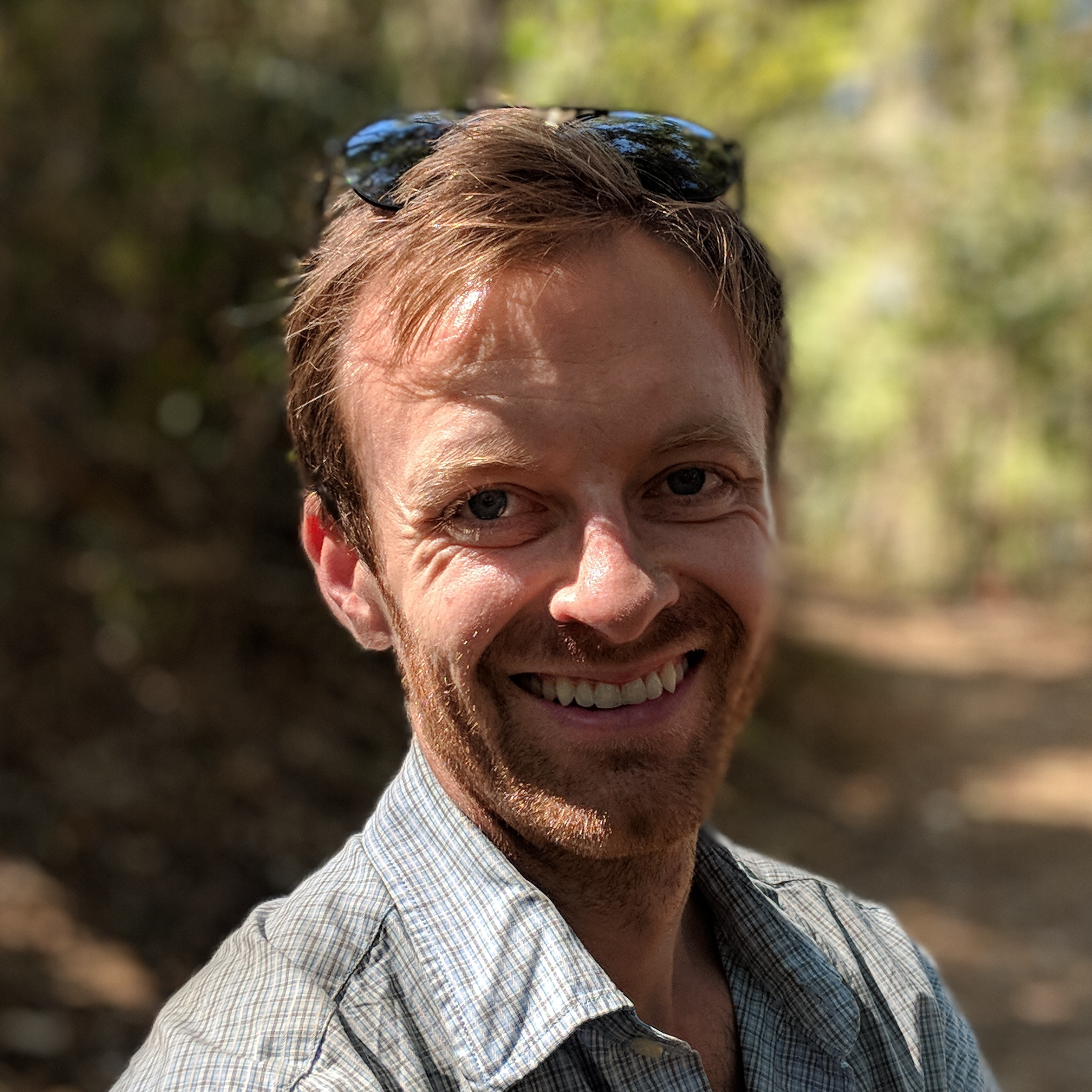
I’m a "freelance" astrophysicist motivated by the grand question of how we -- the Solar System, Earth, and life -- fit into the Universe. Specifically, I observe the space weather of other stars and its effects on planets to better understand how planetary atmospheres evolve over billions of years. I am co-Principal Investigator of the Survey of Transiting Exoplanets in Lyman-α, the largest exoplanet-focused Hubble Space Telescope program yet undertaken. Outside of astrophysics, I climb cliffs, backpack on- and off-trail, cultivate evergreen trees, and fly a small taildragger airplane.
RESEARCH
Publication List (Refereed) | ORCID 0000-0001-5646-6668 | GitHub Code
At the highest level, my research focuses on observing the space weather of stars and its influence on planets. On the stellar side, my earliest work focused on ultraviolet emission and stellar flares. From there, I have shifted toward developing reliable methods to detect and measure the magnitude of stellar coronal mass ejections. In 2024, I co-led a workshop at the Keck Institute for Space Studies focused on developing methods to detect these and other space weather events from stars (read our final report). On the planetary side, I have observed hydrogen escape from planets (driven by stellar radiation) using the absorption that escaping hydrogen produces against the backlight of stellar emission (also known as Lyman-α transit observations). I was part of the discovery of hydrogen escape from the Neptune-sized planet GJ 436 b; led the discovery of hydrogen escape from two planets roughly twice the size of Earth, TOI-776 b and c; and currently co-lead the Multi-Cycle Hubble Space Telescope Treasury Program STELα (the Survey of Transiting Exoplanets in Lyman-α). Occasionally, I make forays into theory, modeling, and planet demographics. (Updated 2026 August)
If searching for my publications, note that online databases sometimes mistake my last name for "Parke Loyd" instead of simply "Loyd."
OUTREACH
I see astronomy as one of our civilization's greatest works—our Pyramids of Giza, only far, far more spectacular—and I enjoy sharing its wonders with non-scientists. Some of my work on stellar superflares has yielded press releases (flare on Proxima Centauri and the "Hazflare"). I particularly enjoy blending the wonders of astronomy with the wonders of the wilderness on Earth. As a postdoc, I instigated, co-created, and co-taught an outdoor learning course for undergraduates titled Wilderness Astronomy. In 2022, I spent a month in residence at the Black Canyon of the Gunnison, culminating in its yearly AstroFest, where I gave public talks and answered questions during stargazing. Most recently, I spent a week as co-commander in a Mars habitat simulation in the Utah desert as part of a study on teamwork in isolated environments, where I authored daily posts about our team's experiences.